Ticket lifecycle & SLA
Create, assign, prioritize, tag and track every ticket. SLA clocks, snooze and breach alerts built in. Every panel states exactly what it counts.
CapyDesk ships as one Go binary and one PostgreSQL database. Email, Telegram, Web Push and a customer portal land in the same ticket conversation, with the day-to-day polish of a commercial SaaS, on your own infrastructure.
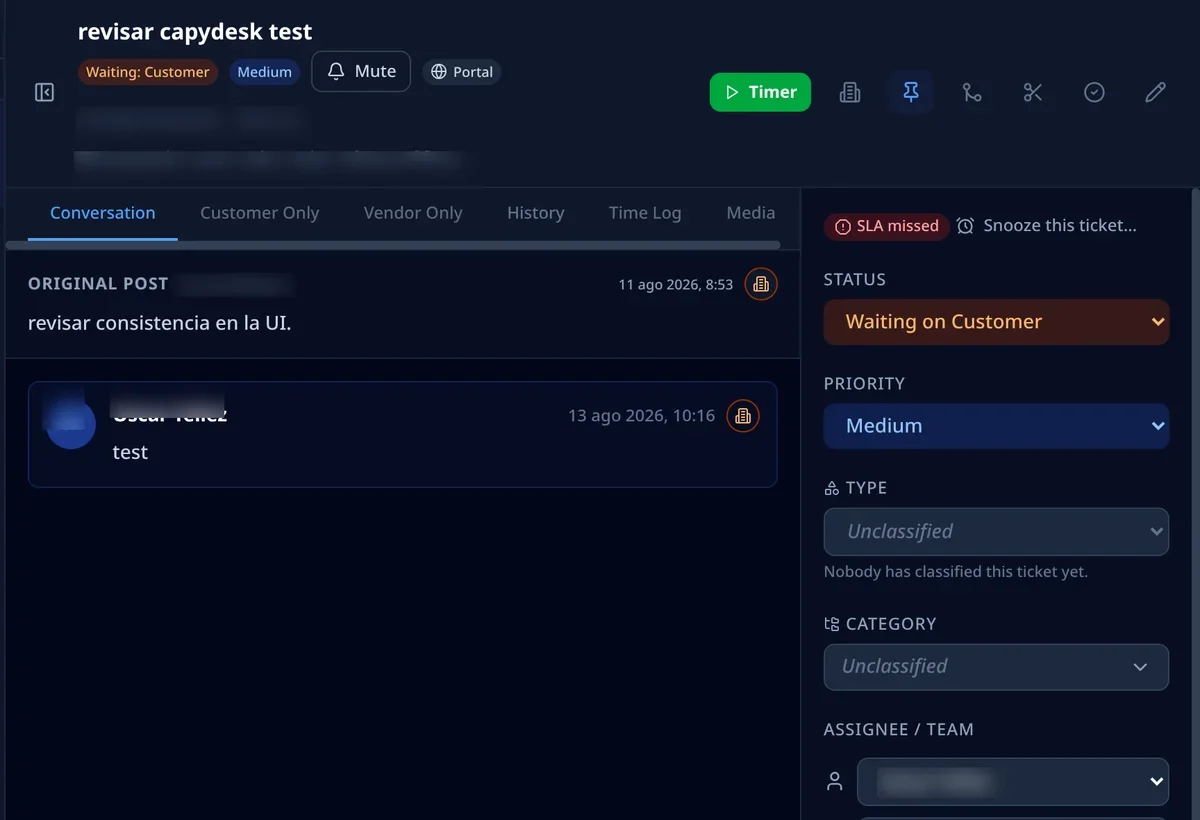
Ticket lifecycle, SLA clocks, multi-channel notifications and a customer portal. The workflow a real operations team runs every day, in one deployable binary.
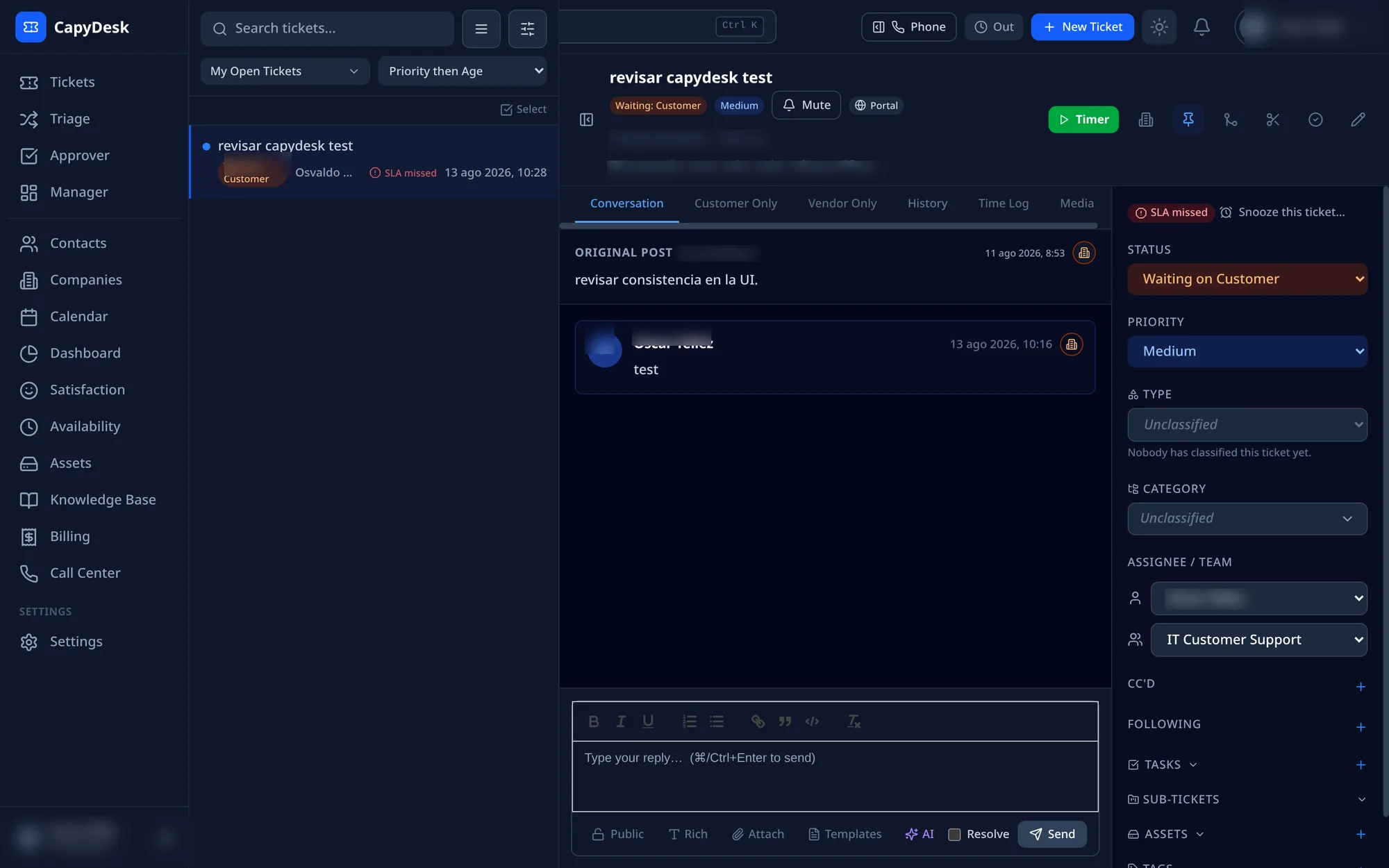
Create, assign, prioritize, tag and track every ticket. SLA clocks, snooze and breach alerts built in. Every panel states exactly what it counts.
Public and internal comments, CCs and followers, auto-reopen on customer replies, full audit history on every thread.
Passwordless magic-link login, a mobile-first timeline and real-time toasts over Server-Sent Events.
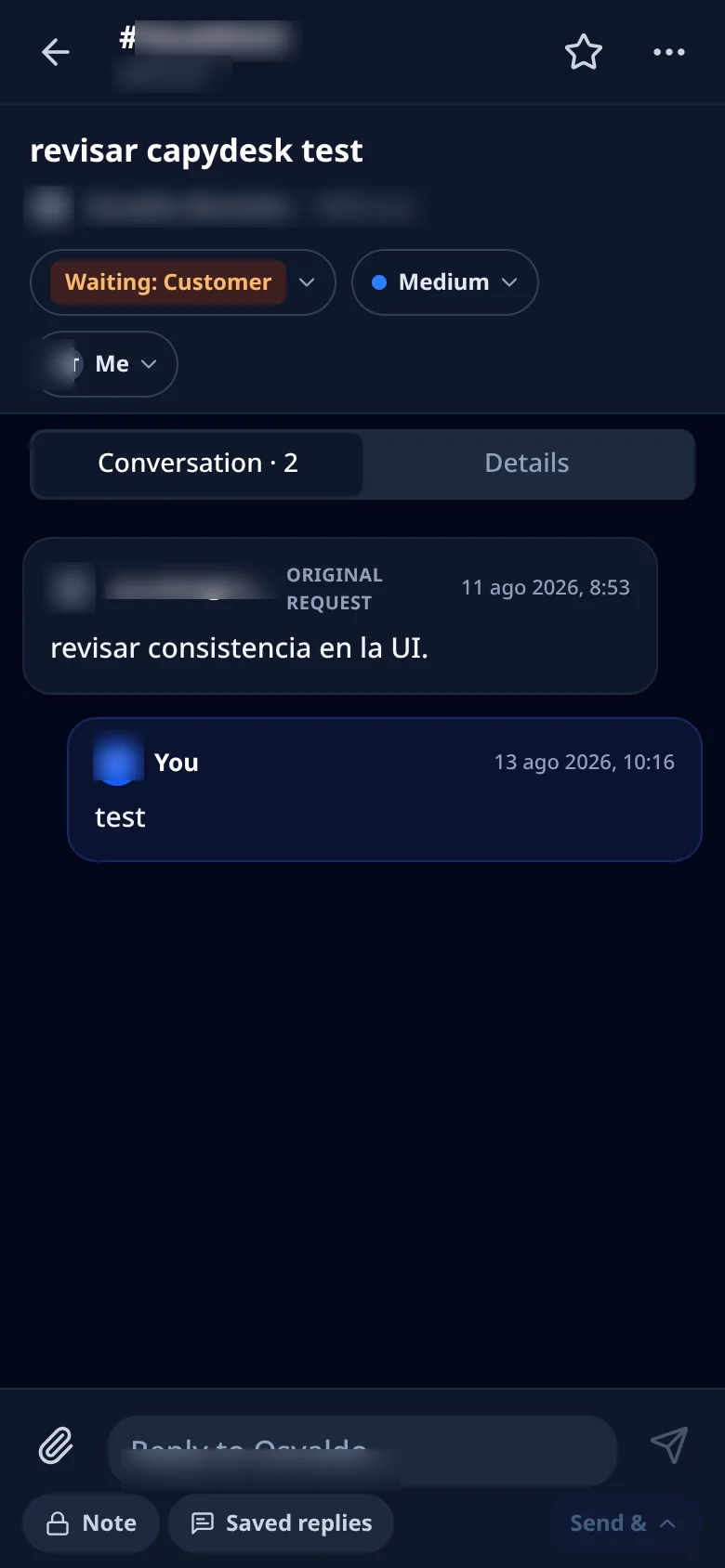
Queues with swipe-to-take, one-round-trip ticket opening, a docked composer and saved replies.
IMAP polling turns inbound mail into tickets; outbound through SMTP, SendGrid, Mailgun or ZeptoMail.
Bell, browser notifications, Telegram and email. Per-event routing with roll-ups, mutes and quiet hours.
The same binary serves the full desk, the customer portal and the phone client. Dark mode included.
Every ticket opens as a conversation: original post, replies, internal notes, time log and a details rail with SLA, priority and assignment.
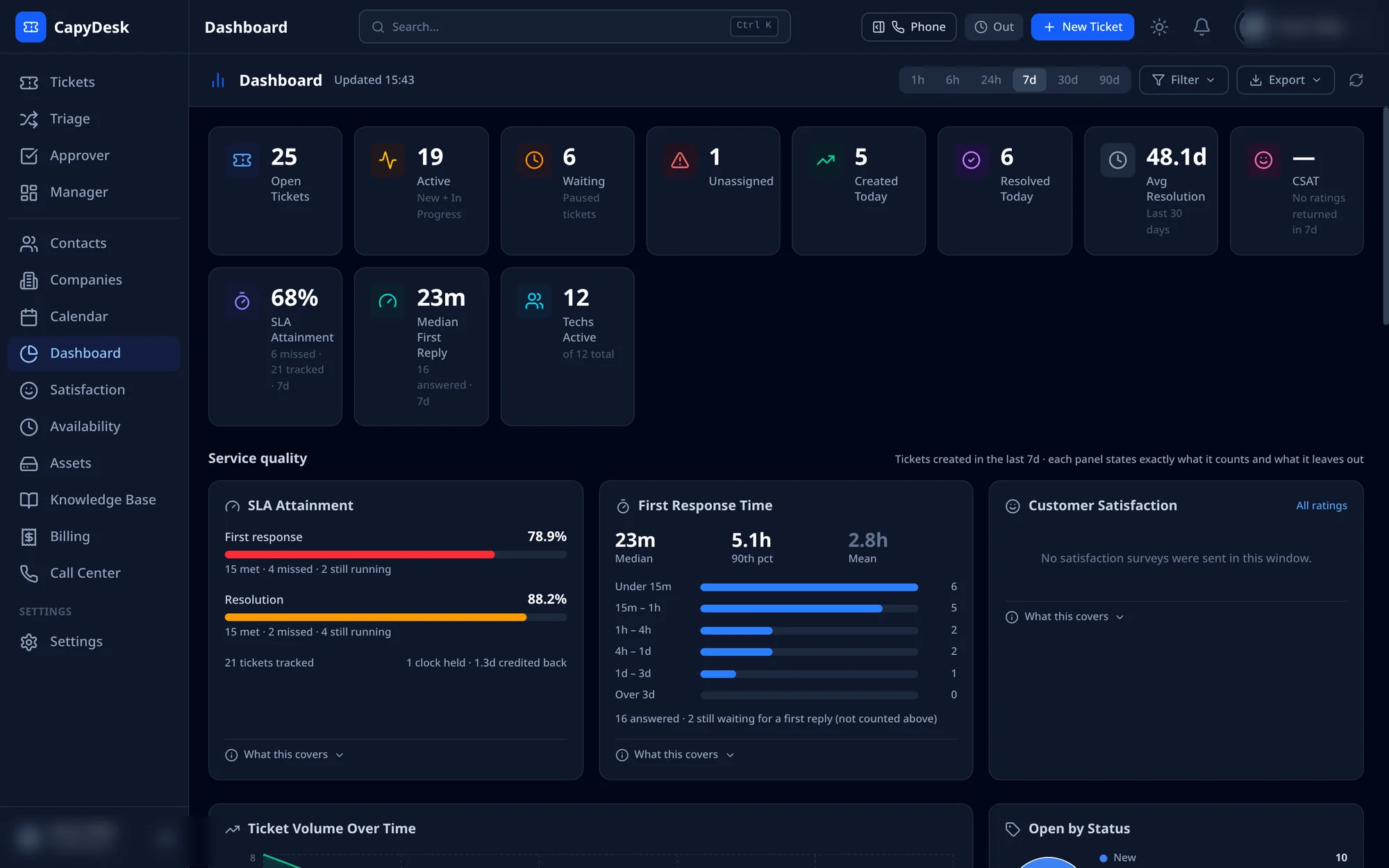
SLA attainment, first-response percentiles, CSAT and volume trends. Measured honestly, counted exactly.
Below 1024px the same app becomes the phone client: queues, swipe-to-take, docked composer and push with actions.
One notification matrix routes each event to the right place: per event, per person, with quiet hours.
IMAP polling in, SMTP or a provider out.
Lifecycle events as channel threads; per-agent DMs.
VAPID push with actions and an app-icon badge.
Magic-link login and live toasts over SSE.
Every part is open: clone the repo, run it on your own metal, fork it. The parts list is public.
Open the desk, or take the source and run it yourself.